







08 May The Art of Collecting: Building a Meaningful Geek Collection
A Thoughtful Approach to Collecting for Geeks
A geek collection doesn’t have to mean clutter, overspending, or chasing every new release. In this guide, we’re talking about a slower, more intentional approach to fandom collecting — one that focuses on meaning, personal style, and creating a space that genuinely feels like you.
Inside this post, you’ll learn how to:
- choose a collection that reflects your personality
- collect more intentionally (without collector burnout)
- display your fandom pieces in a cozy, stylish way
- organize and track your collection simply
- care for collectibles without overcomplicating it
- discover your personal collector style
Whether you collect Funko Pops, manga, art prints, comics, games, or sentimental fandom pieces, this guide is here to help you build a collection that feels thoughtful, personal, and joyful.
The Art of Collecting: Building a Meaningful Geek Collection
When something small becomes meaningful, it’s a moment most of us don’t notice right away. It’s not when we decide to become collectors, but often one item, one character, one story we didn’t expect to hold onto the way we did. Maybe it was a comic you picked up on a random afternoon. Or a figure you almost didn’t buy—but couldn’t quite leave behind. And then, without really trying, you start to build something.
Not just a collection—but a reflection.
Focus on pieces that still feel meaningful over time.
Let your collection support your home instead of overwhelming it.
Tracking your collection can reduce impulse buying and duplicates.
Your collector style is personal — aesthetic, sentimental, archival, or somewhere in between.
A meaningful collection is about connection, not quantity.
When Collecting Feels Like You
For a long time, I thought collecting was just about having things. Then I met my first Funko Pop – and yes, I absolutely judged them at first. I remember standing in our local comic shop, looking at those tiny big-headed figures and wondering why anyone would buy them. What was the appeal?
And then I found Louise Belcher.
That was it. That was the moment.
Not because it was rare or valuable. In fact, I don’t think it held any real value at the time. But because it meant something to me.
From there, it slowly grew—characters we cosplayed, stories we loved, pieces we wanted to remember in a more tangible way. Star Wars eventually pulled me all the way in (as it tends to do), and before I knew it, our shelves held more than just figures.
They held moments. And they held memories.
A More Thoughtful Way to Collect
These days, I think about collecting a little differently. Not “how much can I gather?” But more: “what feels worth keeping? What actually adds something to my space? What still feels like me?” Because collecting—at its best—isn’t about accumulation. It’s about connection. It’s about creating a space where the things you love live with you in a way that feels intentional rather than overwhelming.
Why We Collect (Beyond “Because We Like It”)
If you’ve ever tried explaining your collection to someone who doesn’t quite get it, you already know the look. The polite smile behind the “…but why?” energy. And honestly? The simplest answer is still the truest: Because it makes me happy.
But if you sit with it a little longer, it’s usually more than that.
We collect because:
We feel connected to the stories. Characters stay with us. Their journeys become part of ours in quiet, lasting ways.
We’re holding onto something meaningful. Nostalgia, comfort, identity—sometimes all at once.
We’re expressing who we are. Not loudly. Not performatively. Just… honestly.
We enjoy the process. The searching, the finding, the quiet excitement of discovering something that feels like it belongs with us.
And when it’s done with intention, collecting becomes less about the amount we have, and more about choosing well.
Choosing What Belongs in Your Collection
Start With What Stays With You
Before you begin collecting anything, pause for a second. Because honestly, not everything you like needs to live in your home. Not every fandom needs a shelf. And I realized for myself that not every new release deserves a place in your space.
So instead of asking, “What should I collect?” try asking:
- What do I keep coming back to?
- What still feels meaningful over time?
- What actually feels like me—not just right now, but long-term?
Because the pieces that leave a lasting impression aren’t always the loudest or the newest; they’re the ones that stay even after the initial excitement wears off. And they leave you with a feeling of belonging and nostalgia.
For me, at first, that was Star Wars. And it wasn’t because it was trending—but because I kept returning to it. The characters, the stories, and the feeling stayed with me long after I finished the movies, books, and shows.
That’s usually your answer.
Narrow It Down (Without Boxing Yourself In)
Once you know what you love, the next step isn’t to collect everything from it.
And believe me when I say it’s tempting. So. Tempting. 😏
This is where your collection starts to take shape. So instead of collecting broadly, try choosing a lane. You can collect:
- A specific type of item (art prints, figures, books, textiles).
- A specific character or group of characters.
- A specific mood or aesthetic tied to a fandom.
For example, you might love Marvel but only really want to collect pieces inspired by Loki’s color palette and energy. Or you love anime, but focus only on cozy slice-of-life series. You’re not limiting yourself—you’re refining your space. And that’s what keeps a collection from turning into clutter.
Let Your Space Guide You
This is the part most people skip, and it makes the biggest difference. Before adding anything new, look at your space as it is right now and ask yourself, “where would this live? Does it have a place—or am I creating one just to justify it? Will this add to the feeling I want in this room?”
Because collecting isn’t separate from your home—it becomes part of it. A shelf isn’t just storage. A wall isn’t just display space. They’re part of the atmosphere you’re creating. And when your collection works with your space instead of competing with it, everything feels calmer… more intentional… more you.
Collect Slowly (You’re Not Missing Anything)
This might be the hardest part—at least it was for me—but it’s the one that changes everything.
You don’t have to get everything right away.
You don’t have to keep up.
You don’t have to grab something just because it’s “limited edition.”
The truth is that the right pieces will find their way to you again—or something better will. And when you collect slowly you choose more intentionally, you appreciate what you have more, and your collection starts to feel curated instead of crowded.
An Unspoken Rule I Try to Follow
If I don’t immediately know where something belongs it probably doesn’t belong here. Not yet, anyway. That one small pause has saved me from so many impulse purchases—and helped me build a space that actually feels like home instead of a display case.
Living With Your Collection (Not Just Displaying It)
When a Collection Starts to Take Over
Collections always start small — a shelf, a corner, or maybe a single figure you really love.
And then one day you blink and there’s a lightsaber in the bathroom. A stack of Funko Pops on the dining table. And you’re explaining to your guests why your living room has a big blue police box in the corner. Your house suddenly has… layers.
We’ve all been there. For us, it was the huge green pipe that wound around the top of our kitchen cabinets.
This doesn’t happen because we’re doing anything wrong. It happens because we loved something enough to keep adding to it without always pausing to ask how it fits into our space.
That is where this part of the process shifts.
Your Collection Is Part of Your Home
Instead of thinking about “displaying” your collection, try thinking about living with it.
Your collection doesn’t exist separately from your home—it becomes part of the atmosphere you’re creating. A shelf isn’t just storage, and a wall isn’t just display space. They shape how a room feels when you walk into it.
So before you add shelves or display cases, go back to those questions from before as you pause to look at your space: “What kind of feeling do I want in this room? Do I want my collection to stand out—or blend in quietly? Where would this feel natural, not forced?”
There’s no right answer here—just what feels right to you.
Let Your Style Lead the Way
Your collection will always feel more intentional when it reflects your existing style—not fights against it.
For example, in our home, we lean into a more industrial, cozy-modern look. So we opt for metals, medium wood tones, soft textures, and slightly muted color palette. When we collect, instead of filling our shelves with bright, high-contrast pieces everywhere, we choose items that either fit within that palette or become a deliberate focal point. There are times when we even DIY a piece that we love so that it blends with our decor style. This one shift has changed everything in how we collect and decorate our space.
Now your collection isn’t competing with your decor—it’s part of it.
Start With What You Already Have
Before buying anything new look around your space to see if you already have a bookshelf you can restyle; or a corner that feels underused. Can you clear one surface and begin there? Because honestly you don’t need a full collector’s room. And you don’t need a perfect setup. You just need a starting point. And that could be one shelf. It can be one surface, or one small, intentional space.
Create Space, Not Clutter
This is where things start to feel more aligned. Instead of trying to show everything everywhere all at once, give your pieces room to exist. Here are a few ways to do that:
- Leave breathing room between items
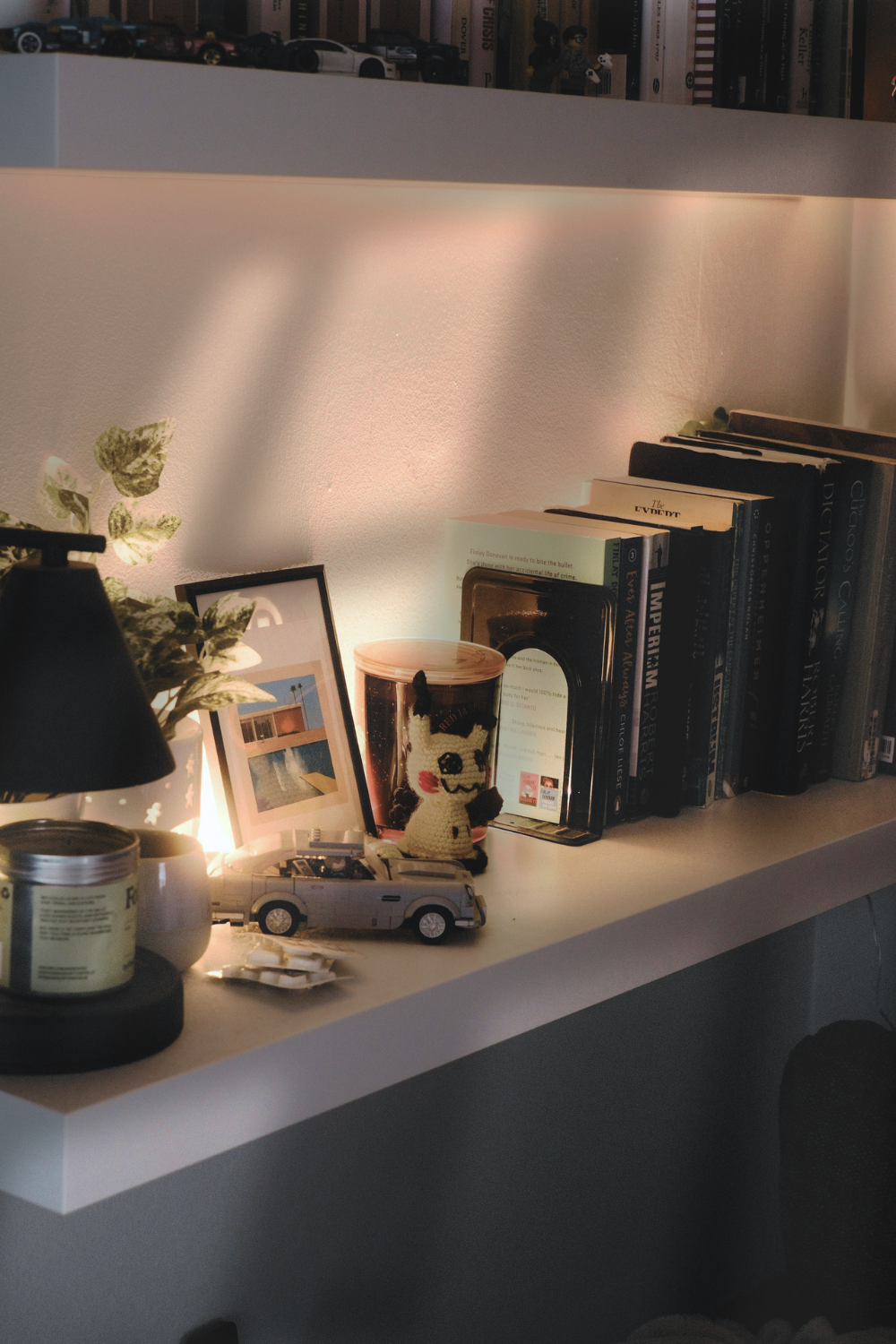
- Mix in non-collection elements (books, plants, candles)
- Let one or two pieces be the focus instead of ten
And remember that you are not building a store display. Rather, you’re creating a space you actually want to live in.
Organize in a Way That Feels Natural
There isn’t one “right” way to organize a collection—no matter what the internet says. What matters is that it makes sense to you.
Here are some softer ways to think about it:
Group by feeling (cozy, bold, nostalgic).
Group by story or world.
Group by color or tone.
Or simply place things where they feel right.
If it makes you pause and smile when you walk by, then it’s working.
Light Changes Everything
Lighting is one of those quiet details that can completely shift how your collection feels. We don’t want a “museum spotlight” display (unless that’s your vibe). Instead, we want a soft, atmospheric way to show your collection in your space. So think about warm light for cozy corners. Or soft accent lighting for shelves. And even gentle highlights for pieces you love the most.
Natural light is beautiful but it is not always kind to collectibles. So let the light in—but be thoughtful about where your pieces live.
Keep It Easy to Care For
A collection you can’t maintain becomes one you start to avoid. Keep things simple by choosing displays that are easy to dust, avoiding overcrowding, and giving yourself access to everything.
This isn’t about perfection. You want to create something you can actually enjoy over time.
Let It Evolve With You
Your collection doesn’t have to stay the same forever. It’s your space – a reflection of you. So you should feel good about rotating pieces, or restyling shelves. You can even store some items while others take the spotlight. Honestly, this is a good way to keep your space feeling fresh without constantly adding more.
Make It Yours
At the end of the day, this isn’t about having the “best” setup. It’s all about creating something that feels like you. Your space is personal and your collection is personal. Add your own layers sprinkle in touches of small personal details that tie everything together.
Your collection should feel like a natural extension of your life—not something separate from it.
Tracking Your Collection (Without Overcomplicating It)
When You Realize… You Already Have It
So you find something you love and you bring it home, excited to add it to your space. And then you realize you already own it.
(Ask me how I know.)
This exact thing happened to me when I spotted a Funko Pop of one of my favorite characters. I sprinted to the register with my treasure in hand, brought her home, and found her… already sitting on my shelf, living her best life.
It worked out in the end. I was able to get one of them signed, and now we’re just calling it fate. But it did make me pause and realize that maybe I needed a better way to stay connected to what I already had.
Tracking, But Make It Gentle
When people hear “track your collection,” it can feel a little, well, intense.
Spreadsheets. Apps. Systems. And suddenly your cozy hobby feels like a second job.
But it doesn’t have to be that way. Tracking isn’t about being perfect or hyper-organized. It’s really just about knowing what you have and remembering what you love. All to make future choices a little easier.
Why It Actually Helps
When it’s done simply, tracking becomes less about “managing things” and more about supporting your experience.
It helps you:
avoid buying duplicates (we’ve all learned this the hard way)
keep track of pieces that are meaningful or signed
remember what you already own when you’re out and about
and make more intentional additions instead of impulse ones
It’s not about control. It’s about clarity.
Choose What Feels Easy for You
There isn’t one “right” system, and you don’t need to use the most advanced option for it to work. Think of it as a spectrum:
Low-effort, cozy options:
- a simple notes app list
- a few photos on your phone
- a small notebook or bullet journal page
Middle ground:
- a basic spreadsheet (Google Sheets works beautifully for this)
- a simple categorized list by fandom or type
More detailed (if you enjoy it):
- apps like CLZ or Libib
- a Notion dashboard
- value tracking, condition notes, etc.
The key is choosing something you’ll actually keep up with. Not what looks impressive—what feels sustainable.
A Simple Way to Start
If you’re starting from scratch, don’t try to catalog everything at once. That’s the fastest way to burn out.
Instead start with one category (like figures or books) or one shelf. And then maybe only new items going forward. Let it build slowly—just like your collection did.
Keep It Light (This Isn’t Inventory Management)
You don’t need to log every detail unless you want to. A simple entry like the item name, fandom, and where it lives is more than enough to be helpful. Anything beyond that is optional.
This is still your hobby—not a warehouse system.
A Small Habit That Makes a Big Difference
One thing that helps is to take a tiny reset moment after you bring something new home. Before it finds its new home, take a quick photo and add it to your list. Then place it where it belongs.
That’s it. No backlog or overwhelm. No “I’ll do it later.”
It’s Also a Way to Appreciate What You Have
Surprisingly, tracking my collection didn’t make me feel more “organized”… It simply made me more aware. I started noticing how much I already had. And which pieces I loved most. I thought more about where I wanted to be more intentional moving forward.
Over time, this naturally slowed down my impulse buying. Not because I forced it—but because I didn’t need more to feel satisfied.
Let It Support You—Not Control You
If tracking ever starts to feel stressful or tedious pull back. You don’t need a perfect system.
You don’t need to track everything. You just need enough awareness to support your space, your budget, and your peace of mind.
Caring for Your Collection (Without Overthinking It)
At some point, collecting shifts from finding things you love to taking care of the things you’ve chosen to keep. And it doesn’t have to be complicated. It’s usually something simple like noticing a thin layer of dust on a figure you love. Or realizing a print has been sitting in direct sunlight a little too long.
Nothing dramatic. Just small moments that remind you, ‘These things matter to me. I want them to last.’
Why Care Matters
This is not for perfection or for resale (unless that matters to you). This type of care changes how your collection feels in your space.
A clean collection feels calmer to look at. Well-kept pieces hold their color, shape, and detail longer. And taking care of your things becomes part of the ritual of enjoying them. So it’s less about maintenance and more about staying connected to what you’ve chosen to keep.
A Simple Approach to Cleaning
You don’t need a full system – just a few small actions every month or so:
- Dust lightly with a microfiber cloth when you notice it
- Use a soft brush or cotton swab for small details
- Keep items out of direct sunlight when possible
- Avoid humidity-heavy spaces (bathrooms are not collector-friendly)
That’s it. Not a schedule. Not a checklist you have to follow perfectly. Just small, occasional resets.
A Few Item-Specific Notes
Different types of collections need slightly different kinds of care, but nothing here needs to feel overly complicated.
Figures & collectibles: Light dusting + occasional detail cleaning is enough
Books, manga, and comics: Store upright, keep them dry, and avoid stacking heavy items
Art prints: Framing (especially with UV protection) goes a long way
Electronics: Keep dust-free and away from heat—simple and steady care
You don’t need to do everything at once. Just take care of things as you notice them.
Care as Part of the Experience
Cleaning your collection isn’t just upkeep. It matters as another quiet way of interacting with the things you love. The small moments when you adjust a figure, wipe down a shelf, or just slightly rearrange something are part of the same feeling that made you start collecting in the first place.
Your Collecting Style (A Gentle Reflection)
By now, you’ve noticed that you don’t just collect; you collect in a certain way. Not better. Not worse. Just yours.
Here are a few collecting styles you might recognize yourself in.
The Archivist
You care about the details.
You like knowing what you have, where it came from, and how to preserve it. There’s something deeply satisfying about organization, condition, and making sure your collection lasts.
Your collection feels a little like a living archive—intentional, documented, and quietly impressive.
What supports you:
- simple tracking systems (Notion, spreadsheets, apps)
- protective storage and thoughtful placement
- giving each piece a sense of order and care
The Aesthetic Collector
You collect with your eyes and your heart.
It’s not just what you own—it’s how it looks, how it feels in your space, how it all comes together. Your shelves aren’t just storage… they’re part of your home.
Your collection feels like a mood. A story. A visual exhale.
What supports you:
- playing with layout, color, and spacing
- letting your collection evolve with your home
- creating little moments instead of filling every inch
The Hunter
You love the search.
There’s something exciting about finding the one—the piece that feels rare, unexpected, or perfectly timed. You’re thoughtful about what you bring in, and the process of finding it is part of the joy.
Your collection feels earned. Chosen. A little bit adventurous.
What supports you:
- keeping a quiet wishlist instead of chasing everything
- giving yourself space between finds
- focusing on pieces that feel worth the wait
The Sentimentalist
You collect for the feeling.
Every piece means something—where you found it, what it reminds you of, who you were when it became part of your life. Your collection isn’t about quantity or rarity… it’s about connection.
Your shelves tell a story only you fully understand—and that’s what makes them special.
What supports you:
- leaving space for meaning, not just objects
- mixing in photos, memories, or personal touches
- letting your collection evolve with your life
You’re Probably a Mix
I believe most of us are a mix of one or more of these collector personality types. You might organize like an Archivist, style like an Aesthetic Collector, and still hold onto pieces like a Sentimentalist.
There’s no label you need to land on. This is just a way to understand yourself a little better as your collection grows.
Build Your Own Meaningful Geek Collection
Your collection isn’t just a group of things. It’s a reflection of what you love, what you’ve held onto, and what you’ve chosen to keep close. And whether it lives on one shelf or across a whole room–whether it’s carefully curated or slowly growing–it’s already enough.
Final Thoughts on Meaningful Geek Collecting
At the end of the day, intentional geek collecting is less about owning more and more about surrounding yourself with stories, characters, and objects that genuinely bring comfort, inspiration, and joy into your everyday life. A thoughtful collection should feel personal, sustainable, and connected to the way you want your home — and your fandom experience — to feel.

No Comments