







15 Aug Wanderstop: A This Geek Life Game Review
I have to admit, I’d been obsessed with Palia and switched between that and Sims 4 Build Mode. But then I got a bit bored with Palia’s constant grind for in-game cash and decor items. I just want to decorate my cozy little plot, you know? So it was time to take a break from all of that, and that’s when hubs suggested Wanderstop.
Wanderstop: A Cozy Game that Heals Your Soul

I didn’t expect Wanderstop to have such an emotional impact on me — but that’s exactly what happened as I played through the story. In a gaming world filled with titles trying a little too hard to be “cozy,” this one quietly delivers a genuine experience that’s reflective, comforting, and deeply human. And yes, there’s tea. Lots of it.
On the surface, Wanderstop is about a former warrior who now runs a peaceful tea shop in the woods — a quiet existence. But as you get into the game, it slowly reveals layers of emotional complexity. The narrative isn’t just a backdrop; it’s the soul of the game. You soon realize that things are not as they seem on the surface and that the game trailer is just a top-level glimpse at a much deeper story. Themes of burnout, healing, and self-reflection unfold at your pace, inviting you to simply be in the world and work through the emotions as they come.
https://www.youtube.com/watch?v=TrAJzniyyZI
(I would gladly add this to my list of games in my Games for Introverts post!)
Game Snapshot
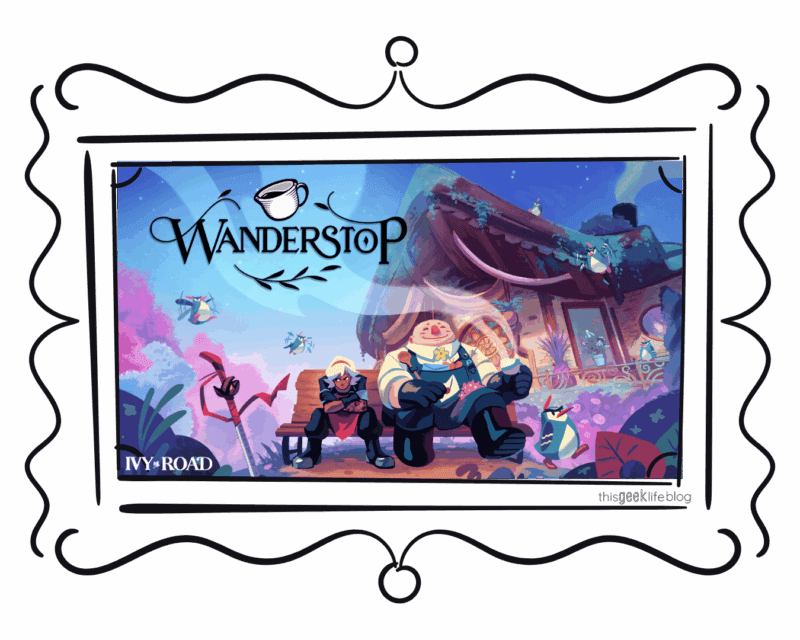
Title: Wanderstop (https://www.wanderstopgame.com/)
Developer / Publisher: Ivy Road / Annapurna Interactive
Platform(s): PlayStation5*, X-Box, Steam, Epic
Genre: Narrative Adventure / Cozy Sim
Release Date: March 11, 2025
Time Spent Playing: 22 hours
Mode(s): Single-player
Price (at time of writing): $24.99 on all platforms
The Story
Alta is a fighter who has trained her whole life to be a warrior, and went undefeated until her most recent losses. The two losses affected her deeply and she decided that in order to gain back her place at the top she would need to find a better, more accomplished warrior who could train her even harder. So off to the woods she goes with her trusty sword in search of this famous warrior. But she finds it hard to continue – collapsing in the forest and waking up next to a friendly but peculiar face on a bench.
Boro has helped Alta out of the forest and into the clearing of his tea shop where he suggests that Alta stay for a while and run the shop. She refuses and tries to go back to the forest to find the warrior, only to discover that her body is unable to go any further and she is unable to lift her sword. Alta doesn’t want to admit that she’s tired, that she’s lost herself while reaching for the top. But reluctantly, and after quite a few failures, she decides that, for the time-being, she will stay and run the tea shop. Just until she can get back to her training.
She is a warrior, after all – not a tea-maker.
The World
I have left out some of the details hoping to entice you to try this game out for yourself. This isn’t completely spoiler-free, but you still have many things to discover as you progress through the story.
There are two pieces to Alta’s world – the forest and the clearing with the tea shop. They are kind of one in the same, though. Of course, there are hints of other places she has been, and you will find those out as you listen to her recall her memories. But for this game, you spend a small amount of time in the deeper part of the forest, and the remainder of your gameplay at the tea shop. It’s a quaint and charming clearing with a quirky shop surrounded by colorful trees and small patches of personal touches. It’s just enough for you to explore, but not too much.
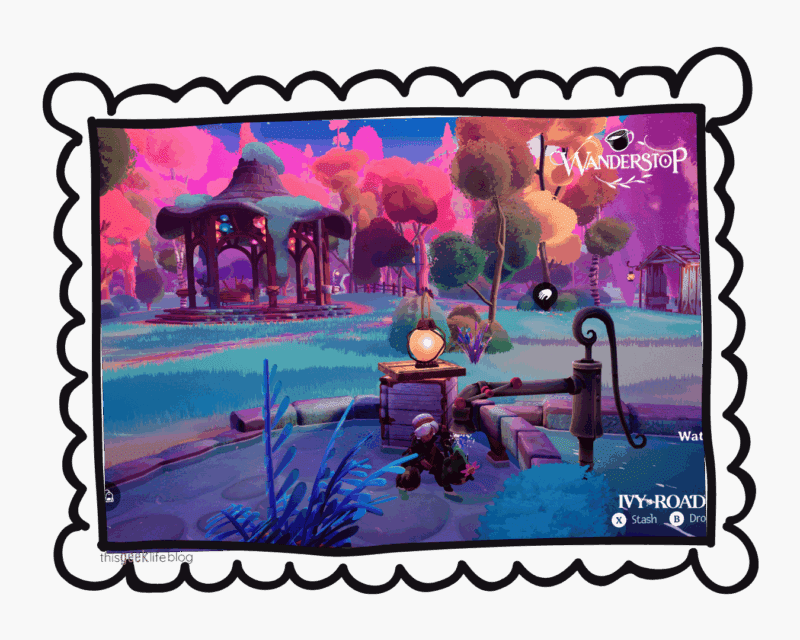
The forest setting feels alive but never overwhelming, and the characters who visit the tea shop are wonderfully written — not just caricatures or NPC’s for the sake of padding the world, but real-feeling people with burdens, joys, and reasons for wandering in. The story never shouts. It listens.
Gameplay & Mechanics
Wanderstop’s gameplay is deceptively simple. In a good way. You steep tea, serve it, tend to your shop, and interact with visitors. But that simplicity is exactly the point. Instead of throwing grindy tasks at you, it lets you engage meaningfully in small acts of care.
The point is not to pay attention to the grind, or get caught up in finishing all the tasks. In fact, you can play at your own pace. Customers never rush you for their tea, and if you make a mistake on the type of tea they want, you can just try again. Or you can wander the grounds of the shop and look for other tasks to do. You can collect tea leaves, sweep, cut weeds, and you can plant seeds to create unique fruit combinations to use in your tea. This is my favorite part!
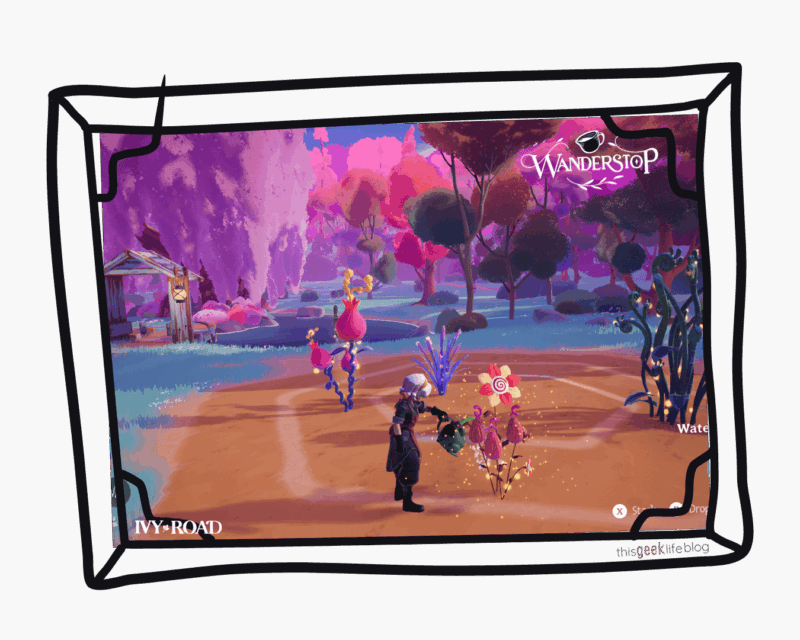
I would not classify Wanderstop as a difficult game. The challenge really is in not trying to grind; especially if you’re coming from a super grindy game. Once you learn the mechanics of the tea machine, how to plant and combine seeds to make ingredients, and how to manage your time as a player, everything else is just… well… cozy.
And there are no bugs. Let me say it again: there. are. no. bugs.
Controls are smooth and intuitive, and the tea-making mini-games are surprisingly meditative. There’s no pressure, no combat, no artificial goals. Just you, your cozy space, and moments of connection. Wanderstop has perfected ‘less is more’.
The Great Big Tea Machine
Making tea is probably the most challenging part of the gameplay. And I say that very, veerrrry loosely. There is a huge machine in the middle of the tea shop that you will climb, kick, and drop ingredients into for the perfect cup of freshly brewed tea. Although it’s similar in theme to other cozy cooking or cafe games, the mechanic for making tea is still creatively unique. The farming sim portion is also pretty similar, so if you’re a fan of these kinds of games you will also love this one.
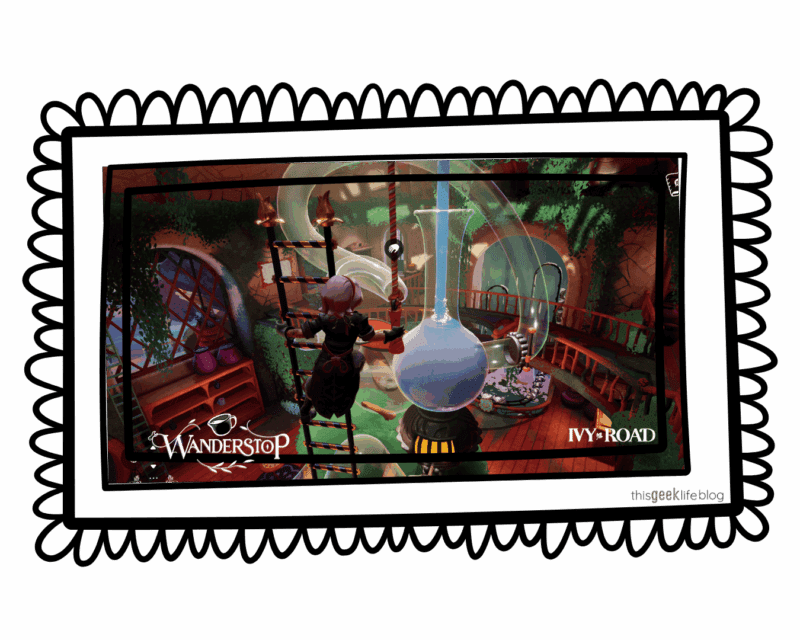
Also, and I cannot emphasize this enough, there is no rush or deadline to meet in making tea and serving your guests. In fact, I believe that Ivy Road was very intentional in how they approached this aspect of ‘coziness’ in the game. After all, you can’t have Alta learn about taking time to rest and appreciate the slower aspects of life if the player is rushing back and forth and getting caught up in grindy tasks.
I can’t tell you how tired I’ve become of games that call themselves cozy, but are actually just mindless grinding in absence of an actual story. Cozy doesn’t mean boring, and engaging doesn’t mean grindy. Wanderstop, on the other hand, has perfectly brewed a mix of cozy with a drop of drama and a sprinkle of mindfulness into one tasty cup of calming tea. In the end, I actually care about what happens to all of the characters. I am invested in their lives and their stories. And I didn’t have to run around a bay, caverns, or village to learn all about them.
The Non-Grind
While playing other games, I often find that I can stop thinking about the tasks as I’m doing them. Have you ever gotten into your car to go to work or return home, and you blink and realize you’re in your driveway? Doing the same thing at the same time everyday means you no longer have to think about what you’re doing. Or why. And many ‘cozy’ games have this mechanic built into their gameplay, whether intentionally or not. You turn off while farming, or mining, or fishing. And while that can be relaxing and a great way to just not think – it also means that there is no intention behind what you’re doing.
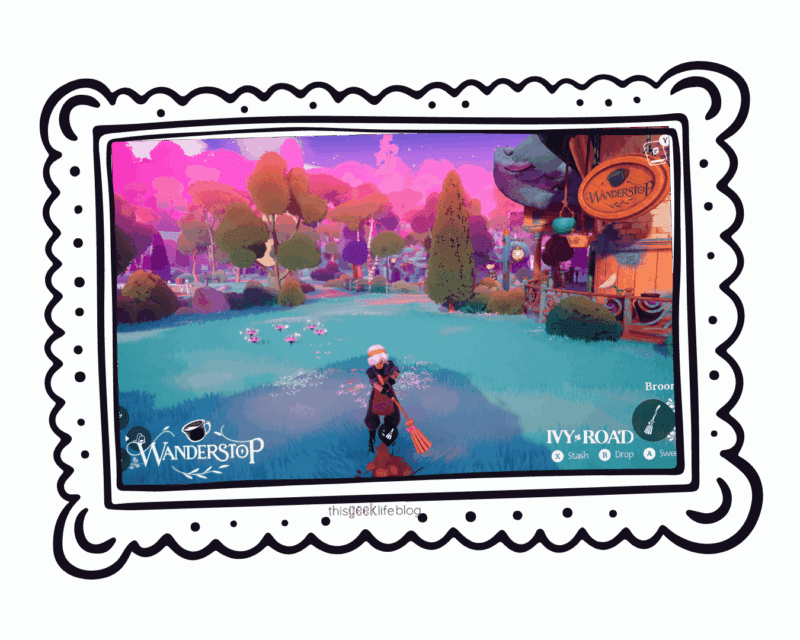
Playing with Intention
This is different from always striving to perform or succeed. Often even the smallest act of cooking lunch can have intention behind it. It’s the kind of mindfulness that allows us to understand why we’re doing something rather than just doing it. What Wanderstop does is really smart – the tasks don’t necessarily have to be done for any accomplishment or merit. But when you do perform them, you still have to do so with a mindful calm that gives you time to think through the process and the why. You don’t just climb up to the tea machine and make tea – you have to think about which ingredients to add first, at what time, and in what order to take each step.
There’s nothing to earn. Nothing to hoard. Nothing to gain. Everything you need is right there and in constant supply. And if you can’t figure it out, there’s a book that will give you the answers – if you want to read it, of course.
In fact, one thing I found very entertaining was the contradiction between the calming vibes of the tea shop and Alta’s movements throughout the game while working in the tea shop. She grabs everything, slams seeds into the ground, kicks the machine, and shakes the little birds to release stolen items. Alta is first and always a warrior, no matter the task, and her actions always reflect her training and fighting skills. Even in the middle of this peaceful tea shop.
Similarity to Other Games
I don’t think I can’t make any comparisons to this game with games like Animal Crossing or Stardew Valley. Admittedly, I could not get into Animal Crossing – it was just too grindy and too boring for me. And the graphics of Stardew Valley just don’t do it for me, although I’ve heard that people really enjoy it. I just don’t know if you can compare the caliber of such an emotion-filled game like Wanderstop with games that may be fun and keep you “engaged”, but in the end don’t leave you feeling changed.
If I were to make a comparison, I would say that that Spiritfarer comes close to the emotional pull you feel throughout this game.
Graphics & Audio
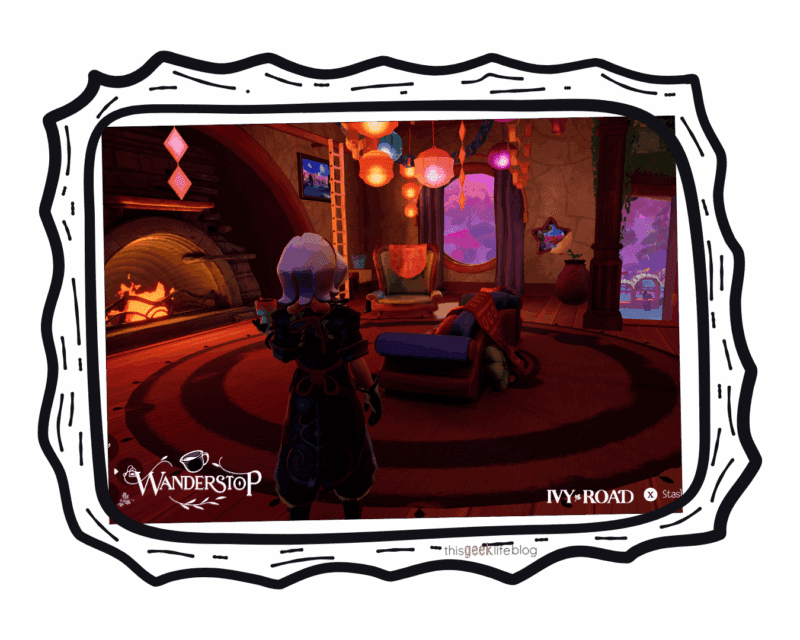
Wanderstop is a beautiful game. Visually, it’s just stunning — not in a high-polish blockbuster way, but in a warm, handcrafted way that fits the vibe of the story. The art style blends gentle, painterly textures with soft but vivid lighting that makes every scene feel like a memory.
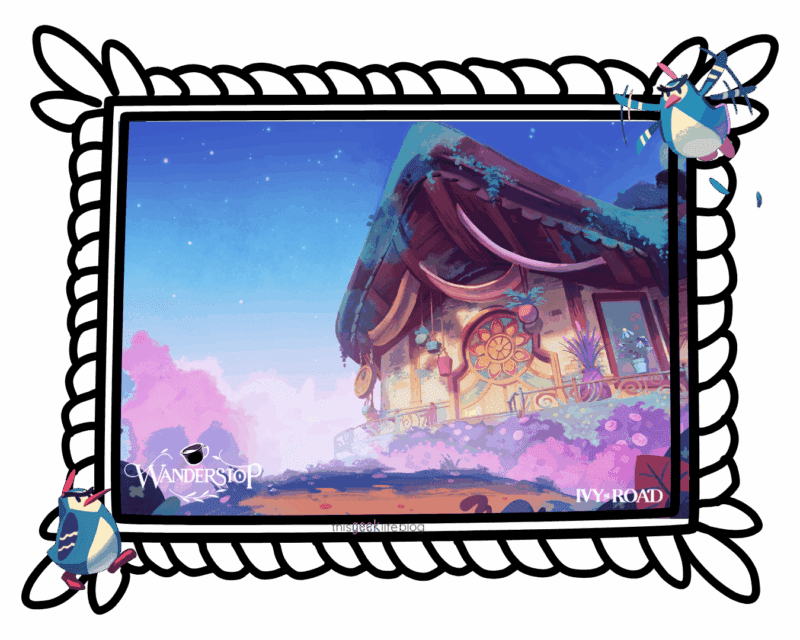
When I play, I tend to get caught up in the beauty of a game. I love the challenge, of course; and I also love getting to meet the NPC’s and complete a storyline. But the thing I always look for first is the art style. The details and colors of the games I play draw me in – from beautiful landscapes to detailed plant-life – I am here for the art and creativity of the game. Wanderstop does not disappoint. From the adorable freckles and facial expressions of Alta, to all the odds and ends tucked into Boro’s pockets, and even the swaying of the hanging pots all around the shop – there is so much detail to see if you take the time to look. And this game allows you that time to just admire its beauty and be in the world.
I would describe the setting of the shop – both inside and out – as dreamy (it’s almost as if you’re in a dream), whimsical, colorful. But pay attention because Wanderstop is ever-changing, and nothing stays the same. Another lesson that Alta and the player must learn.
Music
The soundtrack is gentle and evocative, with ambient nature sounds and a mellow musical score that perfectly supports the game’s mood. It’s the kind of audio design that could double as a meditation app, no lie. In fact, I have listened to it every day on Spotify since completing the game. Daniel Rosenfeld is the composer and producer, also known as C418, and responsible for the perfection that is this game’s musical score. His other works include music for Minecraft and Beyond Stranger Things, among many.
You can listen to the Wanderstop Soundtrack here, or by clicking the Spotify album on the sidebar.
Voices
I would be remiss to leave out the amazing voice that is Alta. Kimberly Woods as Alta is *chef’s kiss* and her emotional performance left me speechless. In fact, I just cried when it was all said and done. She perfectly embodied how Alta tried so hard to keep it all together, but couldn’t quite stop herself from coming undone.
The two other amazing voice performances include Norma Maldonado as Master Winters, and Jeannie Tirado as Monster. All other character conversations are read and expressed through music.
This Geek’s Thoughts & Vibes
As a fan of cozy games, I’ve seen plenty that promise emotional depth and chill gameplay but instead drown you in checklist mechanics with too-grindy filler gameplay, or hollow cuteness. Wanderstop actually gets it. It reminded me of the stillness of A Short Hike, the quiet power of Spiritfarer, and the intentional slowness of real-life self-care. There is no fast or short solution – just time and patience.
And speaking of lessons – I mentioned above how this game leaves you changed. Most of us find some way to identify or sympathize with the MC (main character) in the games we play. As I played through as Alta, I realized that I am Alta. I felt her frustration, her drive and her wins, and I felt her losses so deeply that I cried many times while playing. I realized that I, too, have pushed myself and worked so hard and taken my failures so personally that I could no longer separate the part of me that needs to succeed with the part of me that still wants to live and enjoy my life. Do I even deserve to enjoy life when I haven’t accomplished anything? More than anything, I realized that I am just as scared as Alta, even though I don’t want to admit it. And that in running full speed to the top of my goals, I often forget to just sit and enjoy a cup of tea. Because it’s a waste of precious time that could be used for working.
I realized that I am exhausted.
The Lesson of Letting Go
In fact, another lesson I had to accept was the incompleteness of it all. While playing, you will meet so many charming characters as you play – as Alta goes through the days of making tea. Are they days? We are actually unsure how long she really spends in this charming little clearing at this charming little tea shop. But customers come and go and you will meet and make tea for all of them. Eventually. But you also have to be okay with moving on and allowing the customers to move on. It’s not easy at first. In fact, I found myself getting attached to the characters and feeling literal sadness when we had to watch them go – not really knowing what will happen to them or how their story ends.
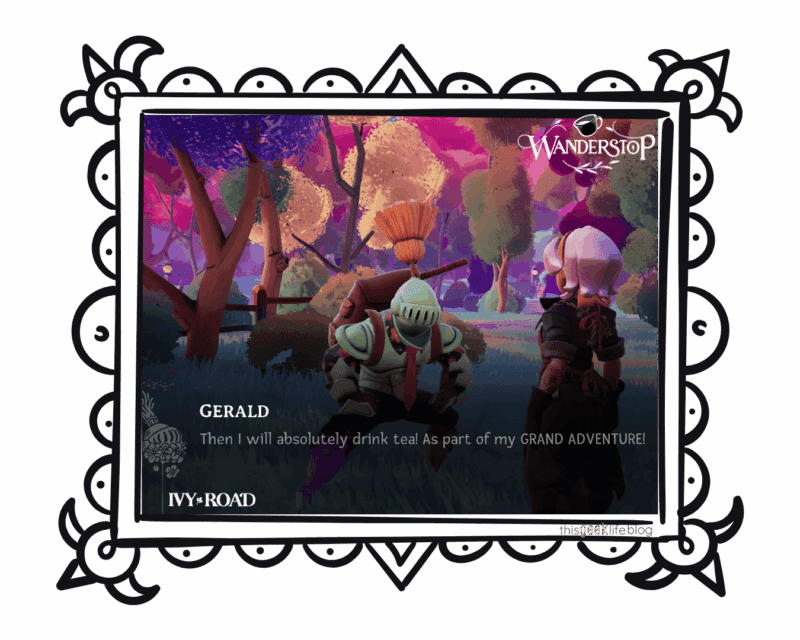
And this was harder for me than I thought. I am a control-freak. So is Alta. So are many of us. The need to control situations so we always know what’s going to happen is yanked away from us as we play this game. Wanderstop – the tea shop and the forest – do what they want. You don’t get to control the weather, the environment, or the people. They all just exist and you have to learn to exist along with them – to move through the changes as they occur and navigate them the best way you can. You can decorate, but it may not stay the same and you may have to redo it all. You have to be okay with the process – the journey. It allows you to constantly be in the moment and only that moment.
The Lesson of Being Present
And Alta. In the beginning, she could really care less about these people or this tea shop. And she is pretty vocal about it through her snippy and impatient responses. She can’t seem to fully grasp that it’s okay to just take it easy and not always have something to do – something to strive for. Boro’s leisurely no-care attitude often seems to frustrate her. But you can choose her responses, and I tried to be realistic in the progression of her attitude – from not caring, to eventually becoming more aware of her surroundings and of the people at the shop. Dare I say that she even comes to like some of them in the end?
The Tea
Also? I’m a tea geek. The detail in the tea-making process made me so happy. Chamomile, lavender, mint — it’s not just flavor text; it’s part of the game’s emotional rhythm. So as someone who has ‘tea-time’ every day, I could really appreciate how thoughtfully the ingredients and how they made the customers and Alta feel were woven into the narrative.
And yes, Alta can make herself some tea, as well, and sit down to ponder her thoughts and memories as she sips in the quiet stillness of the clearing.
Final Thoughts
In the end, you’re left wondering if Alta returned to the hard life of a warrior; but most importantly you’re left hoping she took something from her experience at the little tea shop in the forest.
If you liked Spiritfarer, I think you’ll like Wanderstop. For me, it was everything – the characters, the story, the slowness without being boring,… and the tea. Definitely the tea.
Wanderstop is a rare gem — a game that doesn’t ask you to “grind” for peace, but rather invites you to rest inside it. It’s tender without being overly sentimental, quiet without being boring, and cozy without being empty.
Whether you’ve been feeling burnt out or just need a game that lets you breathe, this is it. Brew a cup of tea, wrap yourself in your comfiest blanket, and let this little forest tea shop remind you of the beauty in stillness.
This Geek Life Rating:
Wanderstop is a true cozy game with a spoonful of adventure in a full cup of heart, steeped with healing, and just the right pour of adventure. I knew immediately that I would like this game, but I was not prepared for the emotional impact it would have on my spirit. Nor did I expect it to hug my soul and make me feel so seen. I truly loved this game and I can’t wait to pick it up and play it through again. You know, when I need a break from fighting.
Have you played Wanderstop yet? What tea would you serve in your own cozy shop? Drop your thoughts — and your tea recommendations — below!
Best IRL (in real life) tea to drink while playing? I recommend Lavender-Chamomile or a nice Chocolate Mint as great picks to try! They’re both like a warm hug with calming vibes.
Don’t forget to share the pin below so other gamer geeks can discover a new favorite!

No Comments